

Most of us are handed a definition of our potential early, often before we are old enough to question it. We are told we are good at something, we build a life around it, and for a while that life fits. Then one day it doesn't quite, and we are left wondering whether we are allowed to want something else.
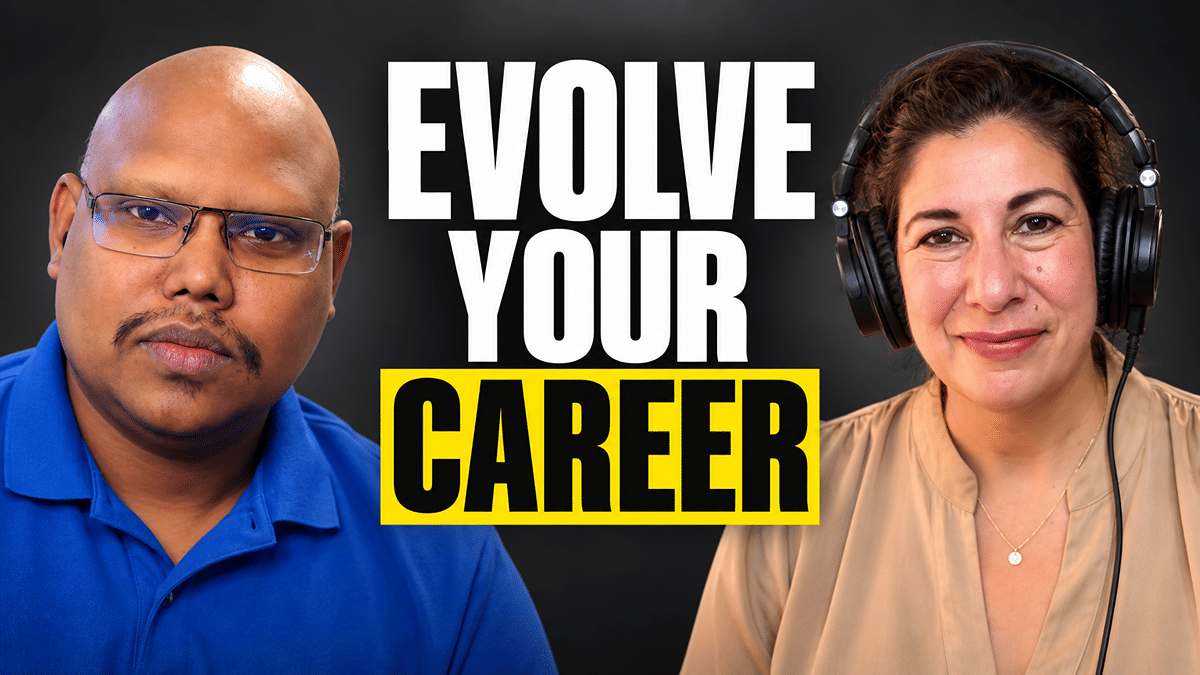
That question sits at the heart of a recent Active Action Podcast conversation with Kate Kayon, a career strategist, speaker, and author who spent most of her life as a professional cellist before rebuilding her career from the ground up. Her book, Beyond Potential, grew out of that pivot. What follows are the ideas from that conversation, shaped into a guide you can actually use.
The nagging feeling is data
Kate had what most people would call a dream career. Yet somewhere in her late thirties, a feeling she couldn't shake kept tapping her on the shoulder: maybe she didn't want to do this for the next thirty years. In classical music, as in many fields, people don't tend to leave. They keep going into their eighties. So the feeling was easy to dismiss and hard to ignore.
Her advice is simple: if you are genuinely happy and fulfilled, keep going, even if everyone around you seems to be reinventing themselves. But if something keeps nagging at you, if you catch yourself fantasizing about a different way to spend your days, treat that as information worth acting on rather than noise to suppress.
The three R's: reassess, redefine, reignite
Kate's framework for navigating a change breaks into three stages.
Reassess. This is the step most people skip. Before chasing a new title, you have to excavate the old stories running in the background, the ones that say a lawyer is responsible and a novelist is not, that quitting is failure, that it's too late. Those stories quietly keep you stuck. The work here is to surface them and rewrite the ones that no longer serve you.
Redefine. Once the clutter is cleared, you take a step back and ask what you actually want now. Kate uses questions that sound almost childlike, like what's your favorite color or flavor of ice cream, because they reconnect people with who they are today rather than who they were trained to be. The goal is to figure out the next version of yourself.
Reignite. This is where intention becomes action. We all know someone who has been about to write their novel for five years. The reignite stage is about building a roadmap, naming the big steps, and actually getting moving.
Think in 90 days, not five years
One of Kate's most practical ideas is to plan in 90-day chunks. Set a five-year goal and you'll likely start in four years and nine months, because there is always more time ahead. Ninety days is different. It is long enough to make real progress and short enough that you can't afford to wait.
Can you go from full-time lawyer to bestselling author in 90 days? Of course not. But you can commit to an outline, or two hours of writing a week, or a measurable step in your health or a new skill. Kate structures her own life around this quarterly rhythm and even built a free quarterly retreat planning guide around it. The point is momentum: in 90 days you can reignite your drive toward the next goal.
Reinvention is usually evolution
When people hear Kate's story, they call it a reinvention. She pushes back on that word. She may have reinvented her daily schedule, but the discipline, empathy, and communication she built as a musician all feed the work she does now. Short of entering witness protection, she says, none of us truly start from zero. We carry every previous version of ourselves forward and add to it.
That reframe matters, because big changes tend to make us feel behind, surrounded by people who started years earlier. Seen as evolution, the years you spent elsewhere aren't lost time. They are experience and wisdom no one else in the room has.
How to make the leap without burning the ships
None of this means being reckless. Bills still need paying and families still need support; you can't pursue self-actualization if your basic needs aren't met. Kate is candid that she had privilege here, but her method scales down.
Before a major move, she gave herself a runway: knowing she had nine months, she invested her paychecks, practiced living on less, and let a leaner budget push her to find work in her new field. If you can build that kind of safety net and run a small trial, that's ideal. If you can't, start smaller still. Grow your audience this month, land one new client, sell one article. Set mini goals, keep increasing them, and take care of yourself along the way. Don't burn the ships behind you.
Sustainable excellence
The conversation closes on a question worth sitting with: what does success look like if you don't want to sacrifice your health, relationships, or joy to get it?
Kate's answer is that balance rarely happens within a single day. Some seasons are overloaded; others leave room to breathe. Rather than forcing every day to balance, she anchors on her values and adjusts which lever gets attention right now, a friend in need, a work deadline, a hobby. Underneath it all is a standard of excellence that is not perfectionism. As a musician, she was trained to reach for a perfect performance while knowing it doesn't exist. The power is in the reaching. Bring that standard to everything, she says, including your rest, your fun, and your joy.
Your next move
If you feel stuck, if you're quietly eyeing a change, or if you simply want to grow within work you already love, the path is the same: reassess the stories holding you back, redefine what you want now, and reignite your momentum in the next 90 days.
Kate's book Beyond Potential is available on Amazon, through other booksellers, and at your local library. You can find Kate at katekayaian.com and connect with her on Instagram and LinkedIn. This conversation was part of the Active Action Podcast; find more at lifeskillschool.net.