Many business owners I meet want to grow. They want more clients, more revenue and more impact. Yet many of them hit the same invisible ceiling. They work harder, copy what competitors are doing and chase the next strategy, but nothing really shifts.
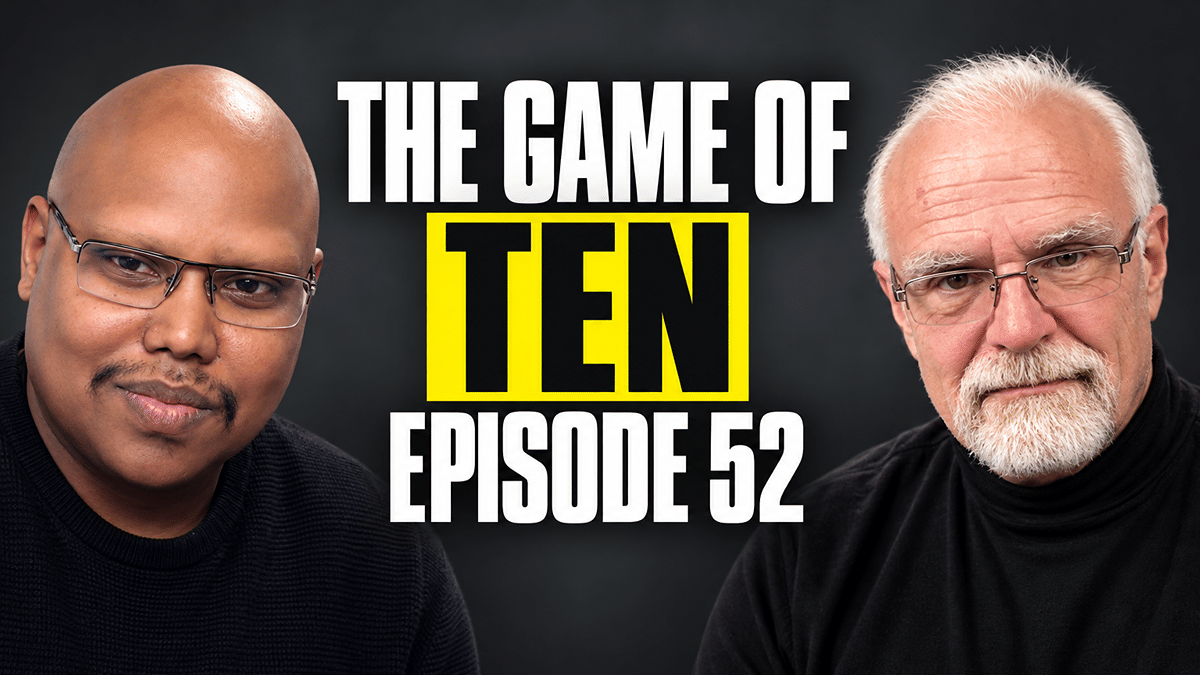
In a recent episode of the podcast, I sat down with Steve Barton, an executive coach, author and creator of the Game of Ten. Steve has over 47 years of real-world business experience. Back in 1980 he took over his father’s small flower shop, then doing about $200,000 a year, and grew it to $2 million in annual revenue. As he put it with a laugh, that’s a lot of roses, a lot of weddings and a lot of emotion.
His central message was simple and uncomfortable: your business will never outgrow your awareness as a leader.
The Size of Your Awareness Sets the Size of Your Business
Steve uses a vivid picture to explain this. Imagine a football stadium. Some people’s awareness is the size of a golf ball sitting in that stadium. Others have the awareness of a beach ball or a Goodyear blimp, and a few fill the whole stadium. Then there are those who rise above it altogether: no walls, no box.
According to Steve, much of what shrinks our awareness is our own thinking. He cited research suggesting we have around 60,000 thoughts a day, most of them negative and most of them about the past. When our minds are crowded with old fears and regrets, there’s little room left to see opportunities, people or solutions clearly.
Fear, Self-Doubt, Guilt and Shame Are Running Your Meetings
I asked Steve how these inner struggles show up in real business decisions such as hiring, pricing, delegation and difficult conversations. His answer was that they show up everywhere.
The only thing we truly control is ourselves. When we act as people-pleasers, trying to keep everyone happy, we give our power away. Steve’s alternative is to hold on to your power through healthy, loving and respectful boundaries: yes, no, stay and go.
That sometimes means hard choices. If people around you are “anchoring” you rather than supporting you, you talk to them first. If nothing changes, sometimes you have to say goodbye respectfully, both for their sake and for your business. Steve was honest that this is especially hard when those people are family or close friends.
Why Founders Can’t Let Go
One of the most common struggles among founders is delegation. Many successful leaders know they should hand work off, yet they hold on tightly.
Steve’s diagnosis was blunt. Founders can’t let go of control because they don’t trust themselves, and if you don’t trust yourself, how can you trust someone else? It really is that simple, he said.
His advice: hire people who are equal to you, if not better. They are the ones who will grow your business. As I reflected during our conversation, that takes both an honest understanding of your own limits and the courage to believe others can carry part of the load.
The Game of Ten
So what is the Game of Ten? Steve describes it as the game of life, and life is supposed to be fun.
The starting point is that there is nothing wrong with you. You are already a ten. You don’t have to earn it. Instead, you peel off the beliefs that taught you otherwise: I’m not enough, I don’t do enough, I don’t have enough.
Interestingly, Steve says positive thinking alone can only take you so far. You can think your way to a nine, but you can’t think your way to ten. Ten comes from letting go of old thoughts entirely. Those past hurts still happened, but they no longer have power over you.
He was also clear that this isn’t wishful thinking. If you have a big idea, prove it. Get purchase orders and letters of intent from people who want your product, and then the bank conversation changes completely. He calls this common-sense spirituality: put the idea into action and let the results speak.
AI, Tools and Who You Really Are
With AI changing how businesses operate, I asked Steve what founders should hand over to AI and what still needs human awareness.
His answer was a reframe. Our minds are tools. Our bodies, our skills, our identities and AI are all tools. We use them, then put them away. The problem starts when we confuse the tools with who we are, and leave them cluttering up the house. Fear makes us controlled by our tools. Love and awareness let us use them well.
Where Should a Founder Start?
If you are a founder who suspects you might be the thing holding your company back, Steve suggests starting with one question: Do I need a therapist, or do I need a coach?
He also encourages finding mentors who have already done what you want to do. If you’re the smartest person in the room, you’re in the wrong room. If you’re the least experienced, you’re also in the wrong room. Look for the room where you’re about average, so you can learn from those ahead of you and mentor those behind you.
Steve closed with a story he told about Warren Buffett being asked, on CNBC, what the best investment is for first-time investors. Buffett’s answer: personal development.
Final Thoughts
What I appreciated most about Steve was his playfulness. He’s an executive coach whose first client led a major telecom company, yet he refuses to hide behind corporate language. He believes a light, joyful approach draws people in, and that we should be able to laugh at ourselves.
If you want your business to grow, start by growing your awareness. Let go of what’s holding you back, set loving boundaries and surround yourself with people who make you better.
Listen to the full episode to hear Steve’s stories and insights in his own words.
Connect with Steve Barton: www.stevebartoncoaching.com. Steve and his son also wrote a book, The Father, the Son, The Aha Moment, about healing your inner child so you can become the best partner, leader and self you can be.
Find Steve’s profile and more resources at lifeskillschool.net.
Stay active and take action.